

If you’ve ever seen earbuds or headphones promoting “ENC” and wondered what it means, you’re not alone. Many people searching for quiet and clear audio — especially for calls and travel — come across two terms: Passive ENC and Electronic ENC.
This guide breaks it all down in simple terms. You’ll learn the difference between Passive ENC vs Electronic ENC, how each one works, their pros and cons, and which suits different everyday scenarios.
Modern earbuds often come packed with features, and sometimes the terminology becomes confusing. When brands highlight features like ENC, ANC, noise reduction, and “crystal-clear calls,” it’s difficult to understand what each feature actually does.
This article helps you avoid that confusion by breaking everything down with simple explanations, relatable examples, and real-life usage scenarios. Once you understand the core idea behind Passive ENC vs Electronic ENC, you’ll be able to judge earbuds and neckbands confidently, even if the marketing feels overwhelming.
Another reason this topic matters is that many budget earbuds today offer “ENC,” but the technology varies widely. Some earbuds rely only on Passive ENC, while others include Electronic ENC meant specifically to improve call quality.
Without knowing the difference, buyers often expect ANC-like performance and feel disappointed. This guide ensures that you understand each type clearly so you know exactly what to expect before choosing your next audio device.
Check this latest article: Personalized Audio 2025: How AI & ML Tune Your Sound
What Is Passive ENC?
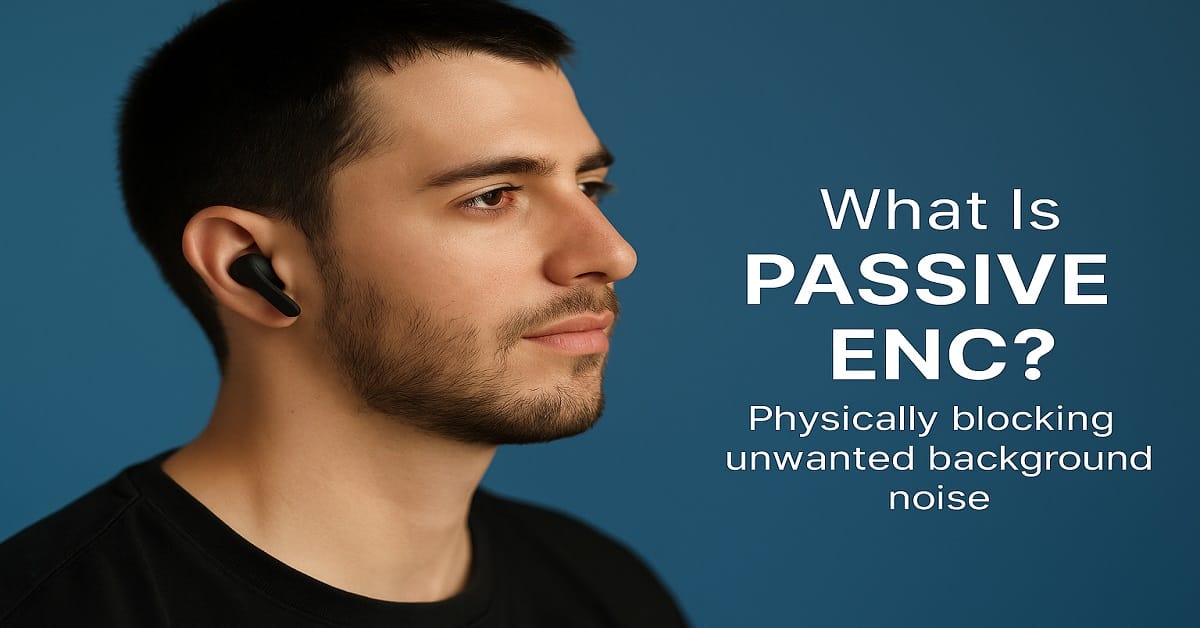
Passive ENC, also known as passive noise isolation, is the most basic form of noise control. It doesn’t use electronics or batteries. Instead, it uses the physical design of the earbuds or headphones to block outside sounds.
Think of it like earplugs. When earbuds fit tightly in your ears — using silicone or foam tips — they form a seal that prevents external noise from entering. That’s Passive ENC. It works best against mid-to-high frequency noise like talking, typing, or street chatter.
Many users underestimate how powerful a good seal can be. When an earbud fits your ear canal properly, the amount of noise it blocks can sometimes outperform cheaper ENC systems. Premium foam tips expand to take the shape of your ear, creating an airtight barrier that prevents sound from escaping or entering.
This natural sealing effect is one of the reasons audiophiles prefer passive isolation—they get better bass response and richer sound without relying on electronic filters.
In practical terms, Passive ENC becomes more effective when the earbud design follows the natural curves of the ear. For example, angled nozzles that point into the ear canal or larger ear cups on over-ear headphones create a stronger barrier.
This means two earbuds with the same driver quality can deliver completely different results depending on their physical design. Understanding this helps you prioritize fit and ergonomics instead of just chasing technical specs.
Recommended for you: Battery & Charging in Audio Gear (2025): What’s Truly Realistic Today
What Is Electronic ENC?
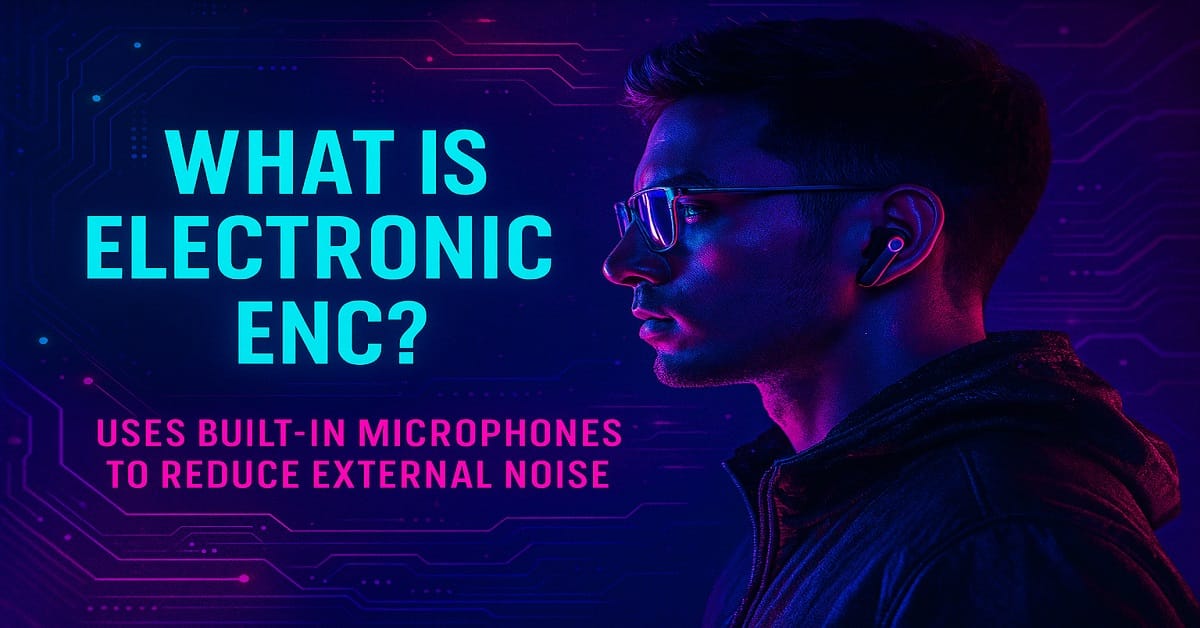
Electronic ENC, sometimes referred to as Active ENC or ANC (Active Noise Cancellation), uses microphones and electronic chips to reduce noise. Tiny mics listen to the sounds around you, and the device creates an opposite sound wave to cancel it out.
Imagine two waves in water crashing against each other — they flatten out. That’s how Electronic ENC works for sound. It’s especially effective against low-frequency noise like engine hum, traffic, or background rumble. Some devices also use it to reduce noise picked up by your microphone during calls.
Electronic ENC technology has evolved a lot in recent years. Earlier ENC systems could only reduce basic background noise, but newer algorithms are smarter and respond quickly to changes in your surroundings. This means if you move from a quiet room to a noisy street, the system automatically adjusts the level of noise reduction so your voice remains clear. Some earbuds even use dual-mic or triple-mic ENC setups to capture different layers of sound for better filtering.
Another benefit of Electronic ENC is its ability to remove wind distortion. When you walk outside or ride a bike, the wind hitting the microphone can overwhelm your voice. ENC algorithms identify this type of noise and soften it without reducing vocal clarity. This makes Electronic ENC extremely helpful for users who make frequent work calls or video meetings while on the go.
How It Works
Passive ENC
- No power or tech required.
- Uses tight-fitting ear tips or cushioned ear cups.
- Works by physically stopping sound from entering your ears.
- Great for reducing voices, keyboard noise, or street sounds.
To understand the difference better, imagine Passive ENC as closing your windows to block outside sounds, while Electronic ENC is like having a smart system inside the room that actively listens and neutralizes any noise that still gets through. When both systems work together, the result is a much cleaner audio experience. This layered approach is common in modern earbuds where physical sealing provides the first level of protection, and ENC handles the rest.
It is also useful to remember that Electronic ENC does not eliminate every sound—it mainly reduces repetitive, predictable noise patterns. Sudden noises like honking, someone shouting, or objects dropping are harder to cancel because the system doesn’t have enough time to create the inverse sound wave. This is why you may still hear sharp noises even when ENC is active, while continuous noises feel softer or almost invisible.
Electronic ENC
- Needs microphones and battery power.
- Detects outside sound and plays a reverse sound wave to cancel it.
- Helps reduce deep, steady noises like fans or engines.
- Useful in both listening and speaking situations (music and calls).
Passive ENC vs Electronic ENC: Which One’s Better?
1. For Phone Calls or Video Meetings
Electronic ENC is the winner here. It filters your background noise so the person on the other end hears just your voice. If you’re in a noisy place, Electronic ENC helps your voice stay clear and sharp. Passive ENC can’t clean up what your mic hears — it only blocks sound for you.
2. For Listening to Music or Watching Movies
It depends. Passive ENC is great if your earbuds fit well and you’re in a moderately noisy place. But Electronic ENC takes it further by removing constant low-frequency noises like airplane hum or AC units. That said, some audiophiles prefer turning off ENC for purer sound.
3. For Traveling (Planes, Trains, Buses)
Electronic ENC is more effective in noisy transport. It actively reduces the steady rumble you’d otherwise hear throughout your journey. Passive ENC helps a bit, but not to the same level.
4. For Quiet Places (Home, Office, Library)
Passive ENC is often enough. In fact, turning off Electronic ENC in quiet areas can save battery and even give a slightly better audio experience if you’re sensitive to sound quality.
In many situations, both Passive ENC and Electronic ENC complement each other rather than compete. For example, if your earbud tips don’t seal well, even a powerful ENC system cannot work efficiently because the unwanted noise directly leaks into your ear. On the other hand, good Passive ENC improves the performance of Electronic ENC by giving it fewer sounds to process in the first place. Understanding this synergy helps you judge audio products more realistically.
When deciding between Passive ENC vs Electronic ENC, it’s also important to consider your environment. People who work from home in quiet spaces often do not need aggressive ENC because passive isolation is more comfortable for long hours. Meanwhile, people who commute daily or use their earbuds outdoors will benefit more from Electronic ENC because it minimizes distracting environmental noise during calls.
Explore Next: How Active Noise Cancellation Works
Pros and Cons
Passive ENC
Electronic ENC
Another point to consider is maintenance. Passive ENC is unaffected by time—your earbuds will always block the same amount of noise as long as the ear tips remain in good shape. Electronic ENC, however, depends on software optimization. A poorly tuned firmware update can sometimes worsen noise reduction or cause audio lag. Brands regularly push updates to improve ENC, but performance may vary between models.
Comfort also plays a role in choosing between Passive ENC vs Electronic ENC. Some users feel slight ear pressure when ENC is turned on, especially in tightly sealed earbuds. This is because active systems create an internal counter-pressure while cancelling noise. Passive ENC avoids this issue completely since it relies only on physical barriers. If you’re sensitive to ear pressure, this is worth considering.
Real-Life Use Cases
- Working from a Café or Open Office: Electronic ENC helps keep your voice clear on Zoom or calls, even with people chatting around you.
- Commuting by Train or Bus: It blocks out low-frequency engine sounds so you don’t have to turn the volume all the way up.
- Watching Movies at Home: Passive ENC is usually enough, especially with well-sealed earbuds.
- Taking a Walk or Jogging: Passive ENC is safer — you can hear ambient sounds if you use semi-in-ear or less tight designs.
There are situations where Passive ENC alone performs surprisingly well. For example, when traveling on a bus with constant conversation around you, foam tips can eliminate a huge portion of that noise without switching on ENC. This gives you a comfortable listening experience without added battery drain. Parents working from home may also prefer Passive ENC because electronic systems can suppress environmental cues like doorbells or children calling.
For people who frequently alternate between quiet and noisy places, the ideal approach is a combination of both. Use Passive ENC when listening to music at home or in the office, and activate Electronic ENC when stepping outdoors or making important calls. This hybrid approach helps you maximize battery life while still enjoying the benefits of smart noise reduction when needed.
Also Read: Spatial Audio 3D Sound: Future, How It Works
FAQs
1. Is Electronic ENC better than Passive ENC?
They serve different purposes. Electronic ENC is better for loud environments and calls, while Passive ENC is great for simplicity and natural sound.
2. Does ENC affect sound quality?
Passive ENC doesn’t change audio at all. Electronic ENC can slightly alter sound, especially in cheaper models. High-end ones are usually well-balanced.
3. Which one is better for calls?
Electronic ENC is better for calls because it cleans up the background noise picked up by your mic.
4. Is Passive ENC enough for most people?
Yes, especially if you’re indoors or using your earbuds casually. A good fit makes a big difference.
5. Can I use both?
Yes! Most earbuds today use both. The design gives you passive noise isolation, and you can turn on ENC when you need more silence.
Some users also wonder whether Electronic ENC can replace full Active Noise Cancellation (ANC). The short answer is no. Electronic ENC focuses mainly on improving call clarity by cleaning your microphone input, while ANC is designed to reduce noise reaching your ears during music playback. However, both technologies share similar principles, and many earbuds use them together to deliver a more complete noise-reduction experience.
Another common question is whether ENC is useful in budget earbuds. Budget ENC may not match premium systems, but it still offers meaningful improvements during calls, especially in outdoor environments. As long as your expectations are realistic, even entry-level Electronic ENC can help your voice stand out clearly in noisy places. Pairing it with good Passive ENC makes the overall experience even better.
Conclusion
When it comes to Passive ENC vs Electronic ENC, you don’t have to pick a side. Both technologies can work together to give you a better experience. Use passive ENC when you want simple, battery-free noise blocking. Turn on Electronic ENC when you need extra silence — especially on calls, during travel, or in noisy places.
The key is to understand your own usage. If you spend a lot of time in public or on calls, Electronic ENC is worth having. If you’re mostly indoors or just listening to music casually, Passive ENC might be all you need.
Now that you know the difference, you’ll never have to wonder what ENC means again.
Choosing between Passive ENC vs Electronic ENC ultimately comes down to your lifestyle and expectations. If you mainly take calls in unpredictable environments, Electronic ENC will make your communication smoother and more professional. On the other hand, if you prefer natural sound with no processing, focusing on good earbud fit and passive isolation gives you a clean, battery-friendly experience.
Whichever type you choose, understanding these technologies ensures you won’t be misled by marketing terms. Instead of guessing what “ENC” means on a product box, you now know exactly how each system works and when it makes a difference. This clarity helps you make smarter decisions and get the best value from your next pair of earbuds or headphones.
If this post helped you understand Passive ENC vs Electronic ENC, there’s a good chance it can help someone else too. Most people feel confused when they see technical terms in earbuds and headphones, and a clear explanation can save them from buying the wrong device. Sharing this guide means you’re helping friends, family, or anyone searching for the right audio technology make smarter and more confident choices.
Good audio knowledge isn’t just for tech experts. When more people understand how ENC works, they get better value for their money and enjoy clearer calls, richer sound, and fewer disappointments. If you know someone who is planning to buy earbuds soon, share this post with them — it might be exactly what they need before clicking “Add to Cart.”

About the Author
Hari Prasad is the editor of AudioPick.in and a lifelong audio enthusiast. He writes detailed, honest reviews and guides to help everyday users pick the right gear without tech jargon. His personal interest in Bluetooth audio, neckbands, and codecs comes from testing dozens of devices over the past few years.