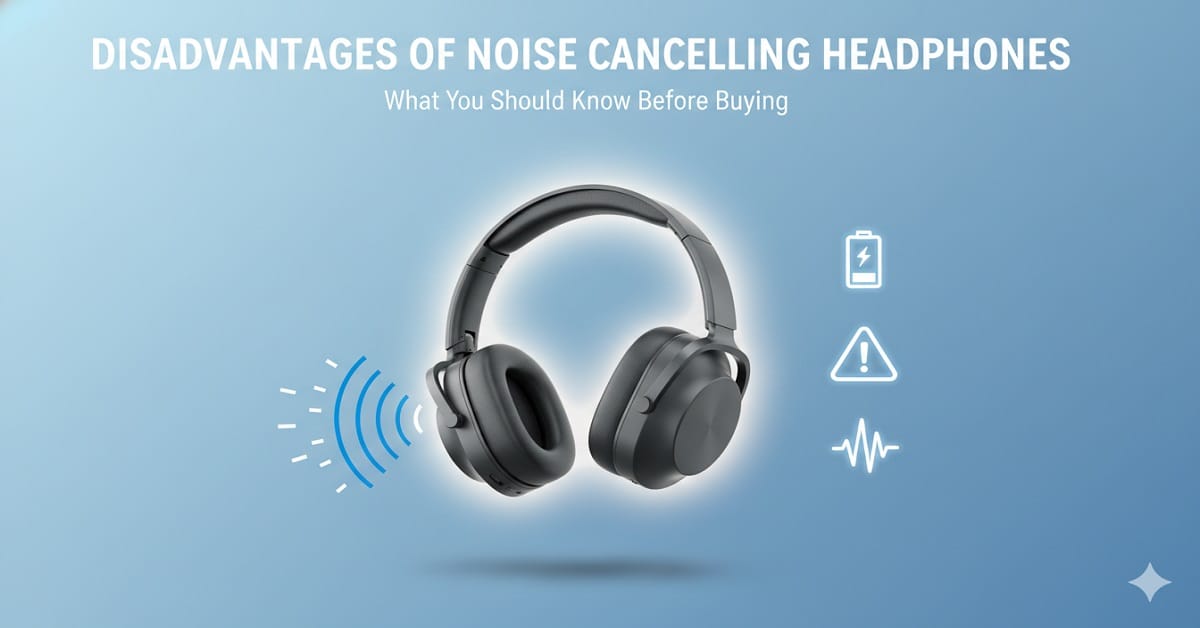
If you’re planning to buy headphones with ANC, you’ve probably heard how amazing they are. They block noise, improve focus, and make music more immersive. But here’s something most people don’t talk about enough — the disadvantages of noise cancelling headphones.
Many buyers jump in expecting a perfect experience, only to later realize there are some trade-offs. That’s why it’s important to understand both the good and the not-so-good before spending your money.
In this article, we’ll break down the disadvantages of noise cancelling headphones in a simple and practical way. You’ll learn how ANC works, where it struggles, and whether it actually makes sense for your usage.
What Are Noise-Cancelling Headphones?
Noise-cancelling headphones are designed to reduce unwanted background noise so you can hear your music or calls more clearly.
In simple terms, they don’t just “block” noise like regular headphones. Instead, they actively cancel it using technology.
Think of it like this:
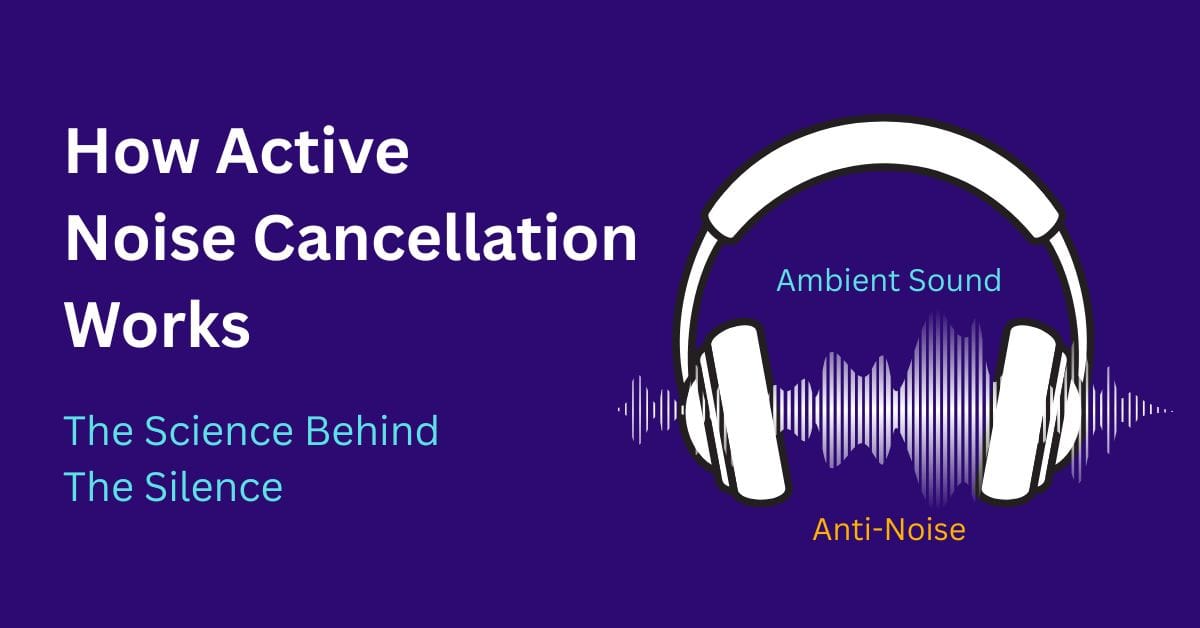
If outside noise is like waves coming toward you, noise-cancelling headphones create opposite waves to cancel them out.
This feature is called Active Noise Cancellation (ANC).
Recent Article: How to Choose TWS Earbuds: A Complete Beginner’s Guide
How Noise Cancellation Works
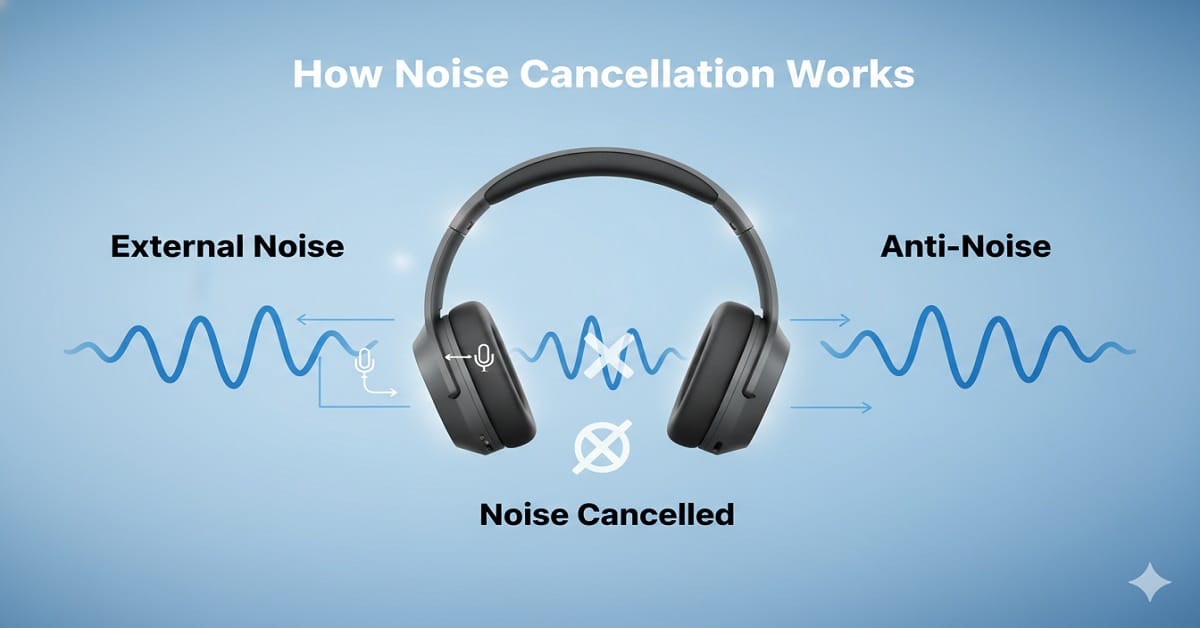
To understand the disadvantages of noise cancelling headphones, you first need to know how the technology works.
Here’s a simple step-by-step explanation:
- Tiny microphones on the headphones pick up external sounds (like traffic or fan noise)
- The system analyzes these sounds in real time
- It creates an opposite sound wave (called anti-noise)
- Both sounds cancel each other before reaching your ears
A simple analogy:
Imagine writing something on paper and then erasing it instantly with a perfect eraser. That’s what ANC tries to do with noise.
Types of Noise Cancellation
Before discussing the disadvantages of noise cancelling headphones, it’s useful to understand the types.
Active Noise Cancellation (ANC)
This is the main feature people talk about. It uses electronics and microphones to cancel noise.
Passive Noise Isolation
This is just physical blocking of sound using earcups or ear tips. No electronics involved.
Hybrid or Adaptive ANC
More advanced systems that adjust noise cancellation based on your environment.
Advantages of Noise-Cancelling Headphones
Before we go deep into the disadvantages of noise cancelling headphones, let’s quickly understand why people buy them.
- Helps you focus in noisy environments
- Reduces constant background sounds like AC, fans, or traffic
- Improves music listening experience
- Useful for travel, flights, and office work
But here’s the truth — these benefits come with some compromises.
Disadvantages of Noise Cancelling Headphones
Now let’s talk about the real reason you’re here — the disadvantages of noise cancelling headphones.
Battery Dependency
One of the biggest drawbacks is that ANC needs power to work.
If the battery runs out, the noise cancellation stops completely. In some cases, sound quality may also drop when ANC is off.
Real-life example:
You’re traveling on a long train journey and your headphones die. Suddenly, all the background noise comes back, and the experience feels very different.
Higher Price
Headphones with ANC are usually more expensive than regular ones.
You’re paying extra for the technology, and in budget options, the performance may not be very effective.
So if your budget is tight, you might not get the full benefit of ANC.
Not Effective for All Types of Noise
This is one of the most misunderstood points.
ANC works best for constant, low-frequency sounds like:
- Fan noise
- Airplane engine
- AC humming
But it struggles with:
- Human voices
- Sudden sounds
- Traffic horns
So if you expect complete silence, you might be disappointed.
You Might Also Like: Do Expensive TWS Earbuds Really Sound Better?
Slight Pressure Feeling in Ears
Some people feel a mild pressure or “vacuum” sensation when using ANC.
It’s not harmful, but it can feel uncomfortable, especially during long listening sessions.
Think of it like the feeling you get in your ears during a flight.
Sound Quality Changes
This is one of the important disadvantages of noise cancelling headphones.
In some headphones, turning on ANC can slightly affect sound quality:
- Bass may increase or feel artificial
- Clarity may reduce slightly
Premium headphones handle this better, but budget ones often struggle.
Battery Drains Faster
Since ANC uses microphones and processing, it consumes more battery.
So compared to normal headphones, you’ll need to charge them more often.
Safety Concerns in Public
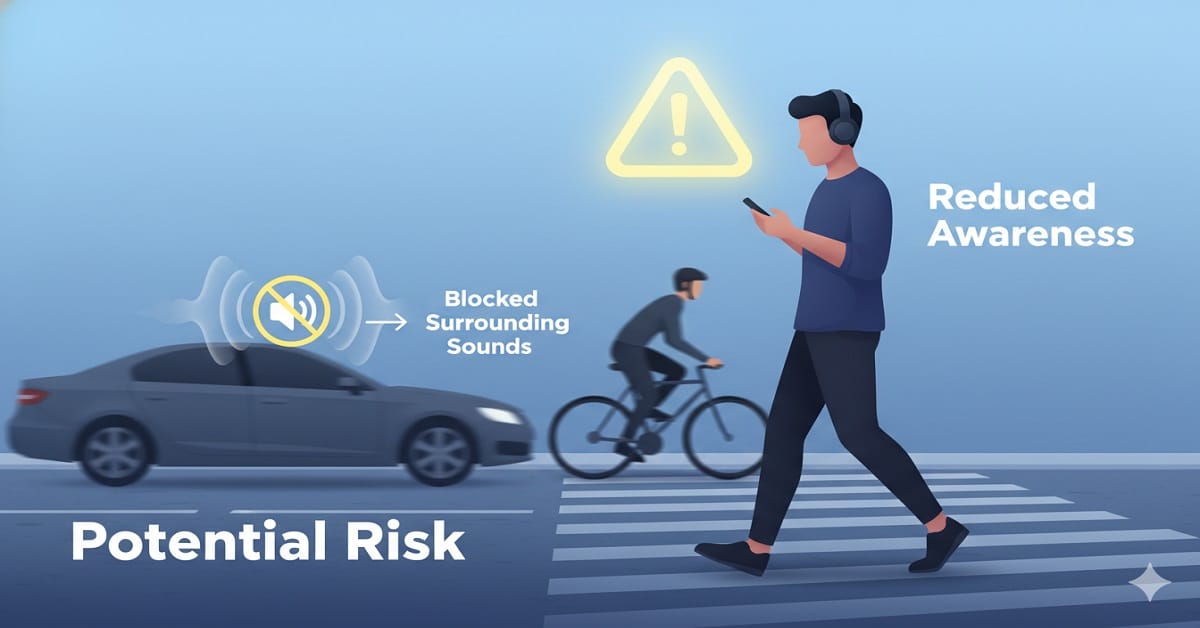
Using ANC in busy environments can reduce your awareness.
For example:
- You may not hear vehicles while walking
- You may miss announcements in public places
This can be risky if you’re not careful.
Not Always Necessary
Another practical point — ANC is not useful in every situation.
If you mostly use headphones:
- At home
- In a quiet room
- For casual listening
Then ANC may not add much value.
In such cases, you’re paying extra for a feature you don’t fully use.
Practical Use Cases
To better understand the disadvantages of noise cancelling headphones, let’s look at real scenarios.
When ANC is Useful
- Traveling in flights or trains
- Working in noisy offices
- Studying in public places
When ANC is Not Needed
- Watching videos at home
- Casual music listening
- Quiet environments
ANC vs ENC (Quick Comparison)
Many people confuse ANC with ENC.
- ANC (Active Noise Cancellation): Reduces background noise for you
- ENC (Environmental Noise Cancellation): Improves call quality by reducing noise for the person on the other side
So if your priority is calling, ENC matters more.
Keep Reading: Are TWS Earbuds Safe for Health? Myths vs Facts Explained Simply
FAQs
1. Is ANC harmful for ears?
No, ANC is generally safe. It doesn’t damage your ears. However, some people may feel slight discomfort initially.
2. Does ANC drain battery faster?
Yes, ANC uses extra power, so battery drains faster compared to normal usage.
3. Are ANC headphones good for calls?
They can help, but ENC is more important for clear calls.
4. Is ANC worth it in budget headphones?
It depends. In budget models, ANC may not be very strong, so don’t expect premium-level performance.
5. Can ANC block all noise?
No, ANC cannot block all sounds. It works best for continuous background noise.
Conclusion
Understanding the disadvantages of noise cancelling headphones helps you make a smarter decision.
ANC is a great feature, but it’s not perfect. It comes with trade-offs like battery usage, higher cost, and limited effectiveness in some situations.
If you travel frequently or work in noisy environments, ANC can make a big difference in your daily experience.
But if you mostly use headphones in quiet places, you may not need it at all.
The key is simple — don’t buy ANC just because it sounds cool. Buy it only if it fits your real usage. That’s how you get true value for your money.
If this guide on the disadvantages of noise cancelling headphones helped you understand things more clearly, consider sharing it with your friends or family. Many people buy ANC headphones without knowing the real limitations, and a simple share from you can help them make a smarter decision before spending their money.
You can send this article in your WhatsApp groups, Telegram channels, or post it on social media for others who are planning to buy headphones. It takes just a second, but it can save someone from confusion or regret. Sharing useful content like this not only helps others but also supports honest and practical tech guides like the one you just read.

About the Author
Hari Prasad is the editor of AudioPick.in and a lifelong audio enthusiast. He writes detailed, honest reviews and guides to help everyday users pick the right gear without tech jargon. His personal interest in Bluetooth audio, neckbands, and codecs comes from testing dozens of devices over the past few years.







)